How can you Test Gold at Home: Simple Ways to Check gold is Real
Gold is one of the most valuable metals on earth, but not every yellow metal you see is real. Many people unknowingly buy or inherit fake or gold-plated jewelry. When they worried about how to identify gold is real or fake at home. Here we provides different methods to check gold purity without using any lab equipment. these methods can be used for all types of gold Karats (14k-24k).

Here’s a complete step-by-step methods test gold at home safely and accurately.
7 Ways To to identify gold purity at home
1. The Water Float Test:
The easiest way to test gold purity at home with water. when gold jewelry dip in water, its show two behavior if gold is real its always sink into water because real gold is dense and heavy while Fake Gold often float or hover in water.

Steps:
- Fill a small glass with water.
- Drop your gold item (ring, coin, or chain) gently inside.
- If it sinks straight down, that’s a good sign because gold is heavy and dense.
- If it floats or drifts slowly, it might be fake or hollow inside.
Tip: Do this in a clear glass near sunlight so you can easily spot the movement.
This test works best on solid items like coins, bangles, or pendants, not thin chains.
2. The Magnet Test – Fastest Way to Spot Fake Gold
we know that Gold is metal but its non-magnetic in nature. That means it never reacts to a magnet. If your jewelry is pulled by a magnet, it contains other metals like iron or nickel. this method is best for those who wants to test gold at home without acid.

How to do it:
- Grab a fridge magnet or any small strong magnet.
- Hold it near your gold jewelry.
- Hold it close to your gold item.
- If it sticks, it’s not real gold — it likely contains iron or nickel.
- If it doesn’t move, that’s a good sign.
But remember: some counterfeit jewelry is made from non-magnetic metals like brass or copper, so it’s best to combine this with another test.
Expert tip: If you’re buying from a new source, bring a small magnet keychain. It’s a quick way to screen pieces before paying.
3. The Vinegar or Lemon Test: A Natural Purity Trick
According to research, vinegar and lemon react with impure metals, but not with real gold. When we add mixture of vinegar and lemon on gold, then impurities react with mixture, but pure gold remain as it is.

How to test:
- Place your gold item on a clean surface.
- Drop a few drops of white vinegar or squeeze a drop of lemon juice.
- Wait 10–15 seconds.
- If you see bubbles, color fading, or a reaction, it’s fake.
- If it stays shiny and unchanged, it’s real gold.
Pro tip: Wash your gold with water and pat dry immediately after the test to prevent residue marks.
4. The Ceramic Scratch Test – Simple and Visual
This one is surprisingly accurate ,but be gentle! Use this method only for small, hidden spots, it can cause minor scratches. You’ll need a plain, unglazed white ceramic tile (the bottom of a coffee mug often works too).

Steps:
- Take an unglazed white ceramic tile.
- Gently drag the gold across the surface.
- Observe the streak:
- Golden streak → Real gold
- Black or gray streak → Fake or plated
Warning: Use this test only on small, hidden areas because it can cause tiny scratches.
5. The Flame Test: For the Bold and Curious
If you’ve ever noticed how gold doesn’t tarnish easily, this test proves it.
Gold melts at a very high temperature (1,064°C). This test helps identify fake alloys that discolor quickly.

Instructions:
- Use a lighter or small torch.
- Hold the flame to your gold item for 30 seconds.
- Observe what happens.
- Real gold will stay bright and won’t discolor.
- Fake gold or gold-plated items will darken or turn greenish.
Caution: Do this test only if you’re confident; avoid damaging delicate jewelry.
6. The Hallmark Test: Every Real Gold Has a Mark
Sometime a small question arise in our mind, how to determined gold karat at home. Every genuine piece of gold carries a karat hallmark, like 24K, 22K, or 18K. So, when we buy gold, a jeweler give card along with jewelry which contain hallmark about the bought gold jewelry.
Look for small imprints inside the ring band or clasp area.

| Karat | Purity (%) | Common Use |
|---|---|---|
| 24K | 99.9% | Pure gold coins & bars |
| 22K | 91.6% | Jewelry |
| 18K | 75% | Rings, chains |
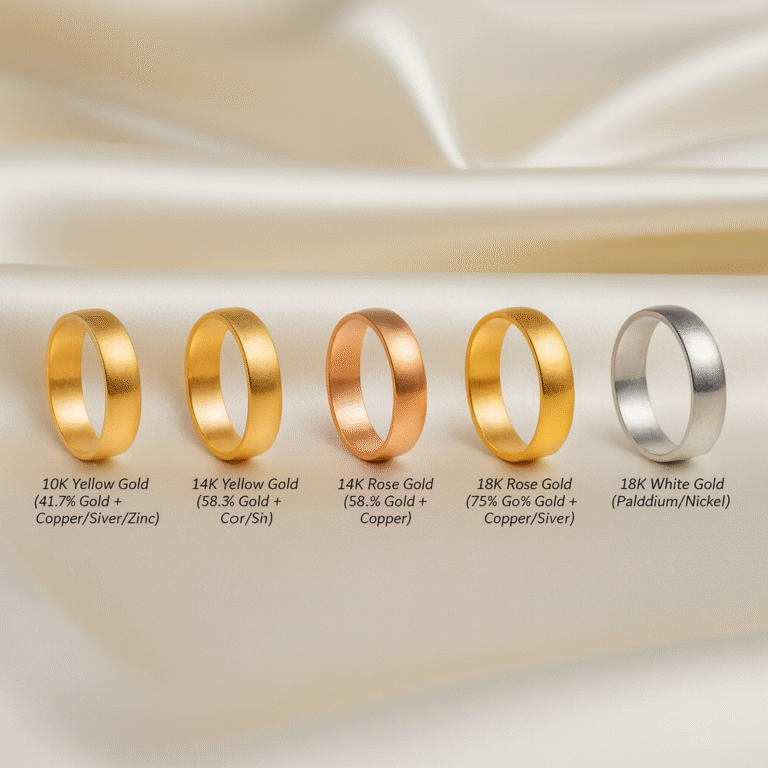
| 14K | 58.3% | Everyday wear |
If there’s no hallmark or it looks uneven, test further using the other methods above.
7. The Acid Test Kit: For Real Confirmation
If you want a near-professional test at home, use a gold testing kit (available online or at jewelry stores). Gold testing kits are available online and in jewelry stores. They include nitric acid and touchstones for purity tests.

How it works:
- Rub a small area of your gold on the testing stone.
- Apply a drop of acid.
- Observe the reaction:
- No change: Real gold
- Greenish reaction: Fake metal or low karat
Always wear gloves and perform it in a ventilated area.
Bonus: Use a Gold Calculator for Value Estimation
Once you confirm your gold is real, check its market value instantly using the Gold Calculator to find out the real-time value based on:
- Weight (grams, ounces, tola)
- Karat purity (24K–10K)
- Live market price
It’s the smartest way to know your gold’s true worth before selling or pawning it.
Common Signs of Fake Gold
- Discoloration around edges or clasps
- Faded yellow plating after wear
- Magnet attraction
- No hallmark stamp
- Reacts with vinegar or flame
If you notice two or more signs above, get your item verified by a jeweler.
FAQ: How to Test Gold at Home
Conclusion
Testing gold at home is simple, safe, and effective if done correctly. From the float test to the magnet and vinegar test, these methods help you quickly identify real vs fake gold without spending money. Always double-check with a professional jeweler or use a gold Price calculator for final confirmation before buying or selling.