How can you test gold purity at home: Simple Ways to Check gold is Real
he year 2026 has already cemented itself as a historic era for precious metals. With global economic shifts, fluctuating inflation rates, and gold hitting record-breaking spot prices, your “forgotten” jewelry box may be sitting on a small fortune. However, as the value of gold rises, so does the sophistication of counterfeits. Whether you are looking to hedge against a volatile US dollar or preparing for the wedding season in India, knowing the authenticity of your metal is the first step toward financial security.

Calculations shouldn’t be a headache. An Online Gold Calculator simplifies the complex math of Weight × Purity (Karat) × Current Spot Price. By entering your gold’s weight and selecting its fineness (such as 22K or 18K), you can bypass the confusing spreads of local pawn shops or jewelers and see the transparent market value in seconds.
Quick Summary: Key Takeaways
- Magnet Test: Real gold is non-magnetic; use a high-strength neodymium magnet.
- The Float Test: Pure gold is dense and sinks immediately; it does not float.
- Hallmarks: Look for BIS (India) or Karat stamps (USA) as a primary indicator.
- Liquid Assets: Use a calculator to determine the “melt value” before selling.
- Purity Matters: 24K is 99.9% pure, while 22K (91.6%) is the standard for Indian jewelry.
Why Gold Authenticity Matters in 2026
In the United States, gold is increasingly viewed as a “safe haven” asset. Investors are rolling over traditional IRAs into Gold 401ks to protect their retirement from currency devaluation. In this context, even a small amount of “fake” bullion can derail a long-term investment strategy.
Contrastingly, in India, gold is an emotional heirloom and a cultural pillar. During festivals like Dhanteras and Diwali, the demand for 22K jewelry skyrockets. Understanding the difference between karats (the parts of gold per 24 parts) and fineness (the parts per thousand) is essential to ensure you aren’t overpaying for “making charges” on impure metal.
Expert Insight: Never sell your gold based on the spot price alone; always account for the buyer’s premium and current market spreads. Most dealers buy at 2-5% below spot.
7 Ways To to test gold purity at home
1. The Water Float Test:
Gold is incredibly dense. Fill a glass with water and drop your item in. Real gold will sink directly to the bottom. If it floats, hovers, or takes time to settle, it is likely a plated alloy. Note: This doesn’t catch high-quality lead or tungsten fakes, as those are also heavy.

Steps:
- Fill a small glass with water.
- Drop your gold item (ring, coin, or chain) gently inside.
- If it sinks straight down, that’s a good sign because gold is heavy and dense.
- If it floats or drifts slowly, it might be fake or hollow inside.
Tip: Do this in a clear glass near sunlight so you can easily spot the movement.
This test works best on solid items like coins, bangles, or pendants, not thin chains.
2. The Magnet Test – Fastest Way to Spot Fake Gold
Gold is a “diamagnetic” metal, meaning it is not attracted to magnets. Use a strong neodymium magnet (not a kitchen magnet). If your jewelry jumps toward the magnet, it likely contains a base metal core like iron or nickel plated with gold.

How to do it:
- Grab a fridge magnet or any small strong magnet.
- Hold it near your gold jewelry.
- Hold it close to your gold item.
- If it sticks, it’s not real gold — it likely contains iron or nickel.
- If it doesn’t move, that’s a good sign.
But remember: some counterfeit jewelry is made from non-magnetic metals like brass or copper, so it’s best to combine this with another test.
Expert tip: If you’re buying from a new source, bring a small magnet keychain. It’s a quick way to screen pieces before paying.
3. The Vinegar or Lemon Test: (test gold purity at home)
This is a simple kitchen test. Place a few drops of white vinegar on the metal. If the gold is real, the color will remain unchanged. If it is gold-plated or “fool’s gold” (pyrite), the acid will cause a color change or a chemical reaction.

How to test:
- Place your gold item on a clean surface.
- Drop a few drops of white vinegar or squeeze a drop of lemon juice.
- Wait 10–15 seconds.
- If you see bubbles, color fading, or a reaction, it’s fake.
- If it stays shiny and unchanged, it’s real gold.
Pro tip: Wash your gold with water and pat dry immediately after the test to prevent residue marks.
4. The Ceramic Scratch Test – Simple and Visual
Take an unglazed ceramic plate. Drag your gold item across the surface with slight pressure. A gold streak indicates real gold. A black or gray streak suggests the item is made of lead or another base metal.

Steps:
- Take an unglazed white ceramic tile.
- Gently drag the gold across the surface.
- Observe the streak:
- Golden streak → Real gold
- Black or gray streak → Fake or plated
Expert Insight: The ceramic test is slightly abrasive. Avoid doing this on high-value jewelry or coins where the aesthetic finish significantly impacts the resale premium.
5. The Flame Test: For the Bold and Curious
If you’ve ever noticed how gold doesn’t tarnish easily, this test proves it.
Gold melts at a very high temperature (1,064°C). This test helps identify fake alloys that discolor quickly.

Instructions:
- Use a lighter or small torch.
- Hold the flame to your gold item for 30 seconds.
- Observe what happens.
- Real gold will stay bright and won’t discolor.
- Fake gold or gold-plated items will darken or turn greenish.
Caution: Do this test only if you’re confident; avoid damaging delicate jewelry.
6. The Visual Inspection (Hallmarking)
The first step is to use a magnifying glass. In the USA, look for stamps like 10K, 14K, 18K, or 24K. In India, look for the BIS Hallmark, which includes the triangular BIS logo and the purity grade (e.g., 916 for 22K).

| Karat | Purity (%) | Common Use |
|---|---|---|
| 24K | 99.9% | Pure gold coins & bars |
| 22K | 91.6% | Jewelry |
| 18K | 75% | Rings, chains |
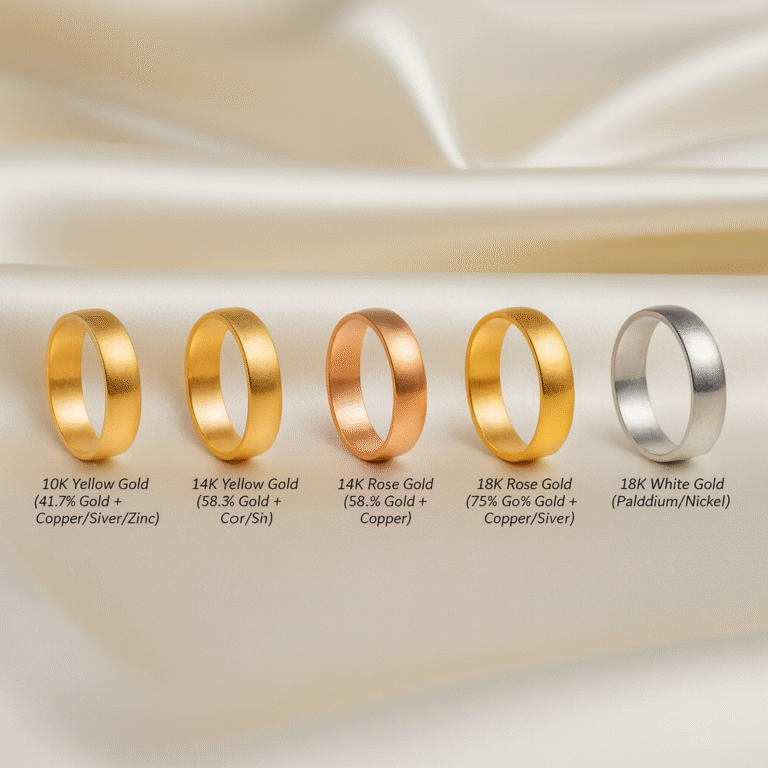
| 14K | 58.3% | Everyday wear |
If there’s no hallmark or it looks uneven, test further using the other methods above.
7. Nitric Acid Test (Professional Grade)
While more advanced, you can buy home “Acid Test Kits.” You make a tiny scratch on the metal and apply the acid. If the metal turns green, it’s a base metal. If it stays the same, it’s gold.

How it works:
- Rub a small area of your gold on the testing stone.
- Apply a drop of acid.
- Observe the reaction:
- No change: Real gold
- Greenish reaction: Fake metal or low karat
Always wear gloves and perform it in a ventilated area.
Common Signs of Fake Gold
- Discoloration around edges or clasps
- Faded yellow plating after wear
- Magnet attraction
- No hallmark stamp
- Reacts with vinegar or flame
If you notice two or more signs above, get your item verified by a jeweler.
Understanding Gold Purity: The Math Behind the Value
When you use an online calculator, the most important variable is the purity. Whether you are dealing with LBMA-approved bars in London or jewelry from a bazaar in Mumbai, the purity determines the “melt value.”
Gold Purity Conversion Table
| Karat | Fineness (Parts per 1000) | Gold Percentage | Common Usage |
| 24K | 999.9 | 99.9% | Investment Bullion / Coins |
| 22K | 916 | 91.6% | Indian Jewelry (Standard) |
| 18K | 750 | 75.0% | Luxury Watches / Stone Setting |
| 14K | 585 | 58.5% | US Wedding Bands / Durability |
| 10K | 417 | 41.7% | Budget Jewelry (US Minimum) |
Global Weight Conversions
Investors often get confused when moving between markets. While the US and UK use the Troy Ounce, the Indian market frequently uses Grams and Tolas.
| Unit | Equivalent in Grams | Market Context |
| 1 Troy Ounce | 31.103 grams | Global Spot Price / Bullion |
| 1 Tola | 11.66 grams | Indian / Pakistani Markets |
| 1 Kilobar | 1,000 grams | Central Bank / Large Scale |
| 1 Pennyweight (dwt) | 1.555 grams | US Jewelry Trade |
How to Use the Gold Calculator Like a Pro
To get the most accurate valuation for your gold after you’ve tested it at home, follow these steps:
- Separate by Karat: Group your 14K, 18K, and 22K items separately.
- Weigh accurately: Use a digital scale that measures to at least 0.1 grams.
- Subtract Non-Gold: If your jewelry has stones or “meena” (enamel), subtract that weight from the total.
- Input into the Calculator: Enter the weight and select the purity.
- Monitor the Spot: Prices update every few minutes during market hours.
FAQ: How To Test Gold Purity At Home
Conclusion
Test gold purity at home is the first line of defense against fraud. By combining the magnet, float, and visual tests with an accurate Online Gold Calculator, you empower yourself to make smarter financial decisions. Whether you are selling for a profit or buying for a wedding, knowing the true value of your metal is the ultimate “safe haven.”